
Gloss Yarn, luster yarn, iron yarn
Information on the history and reconstruction of iron yarn for your tubular steel furniture
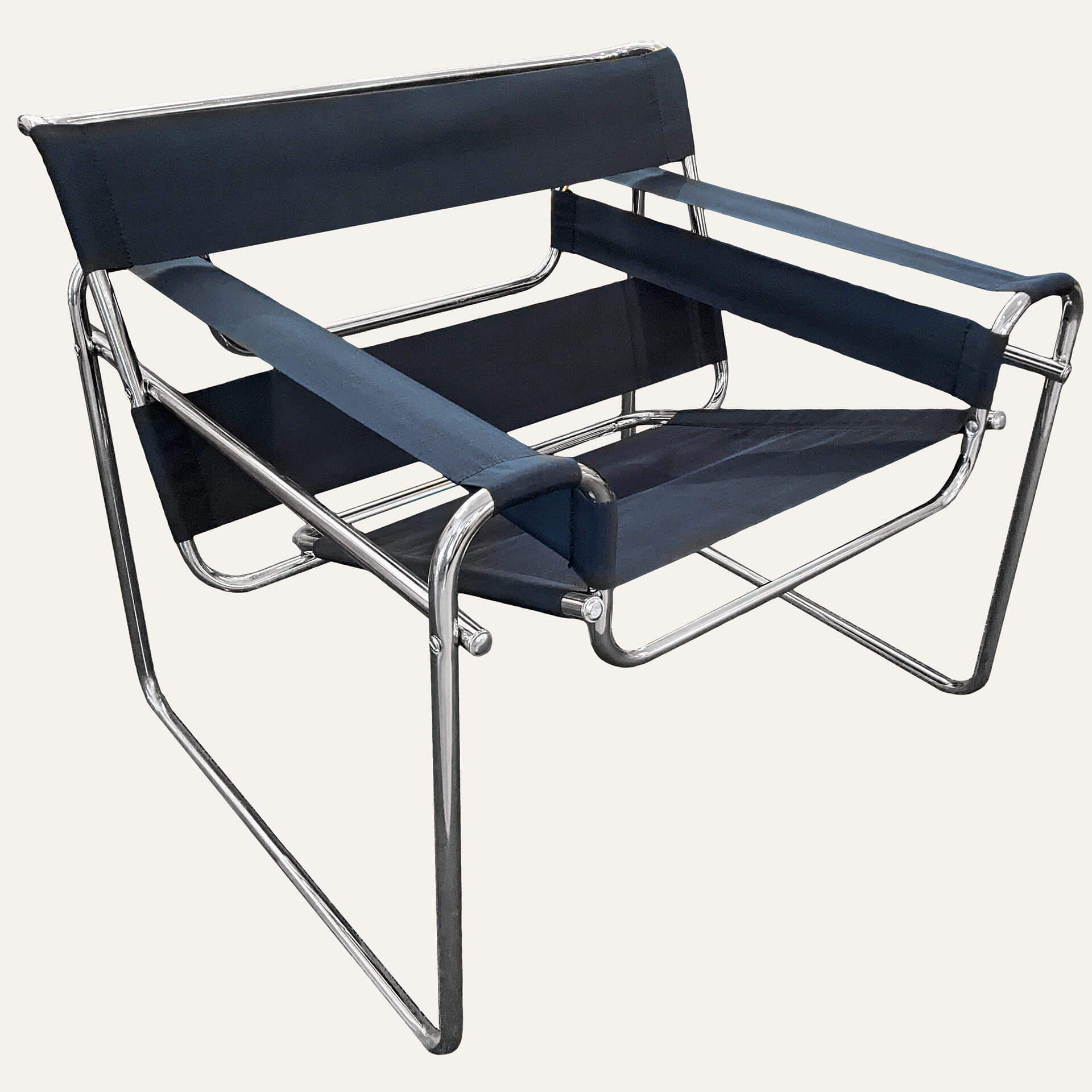
Information on historical origin and current possibilities
Construction
Iron yarn: simple or multiple twisted, tightly twisted cotton or cell wool yarn, which is stiffened with appretur clay (natural plant thicknesses) and brushed on luster machines (brushes) with paraffins to be smooth and glossy.
Iron?
The term ‘iron’ refers to the high strength and stiffness, the content is not a metal compound in the yarn! The luster or Paraffinization was carried out on a machine with rollers and wax-coated brushes. Natural wax, paraffin, vegetable or animal fats were used for the coating.
Application
It is used for heavy mechanical loads, textile surfaces often exposed to weathering or other stresses (tarpaulins, covers, ropes, cords, nets, stocking material on clothing, insulation material, furniture trim, etc. – mostly braided, knitted or woven textiles).
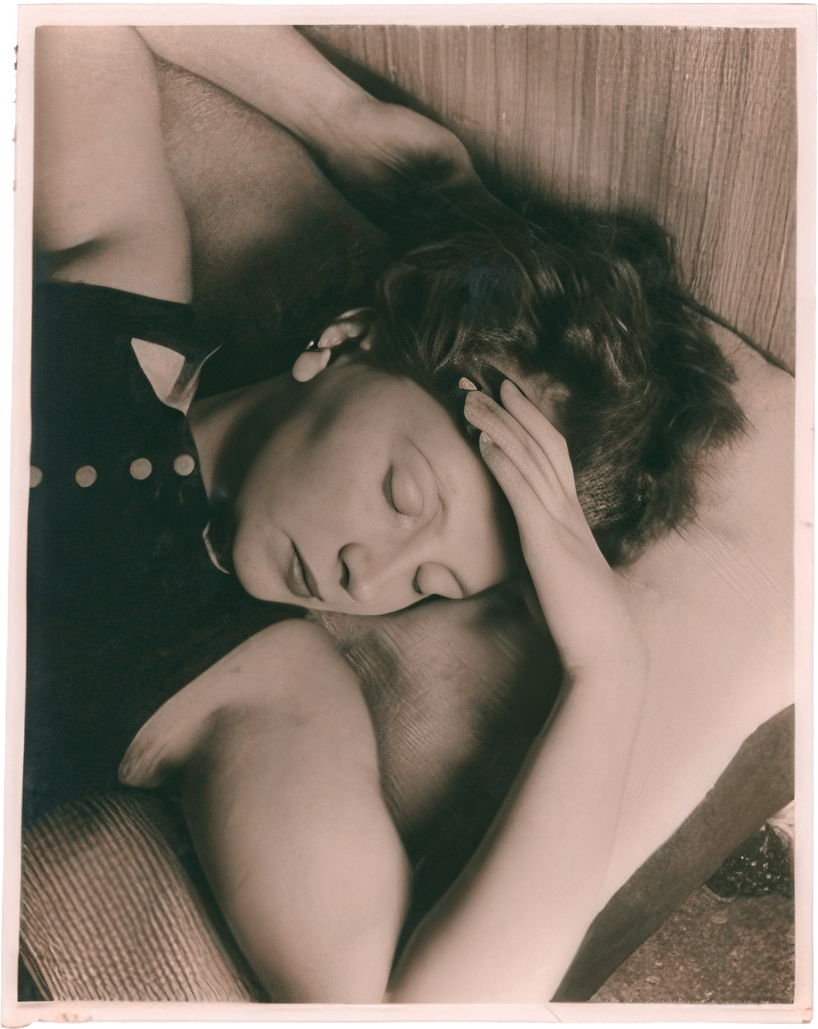
Margaretha Reichardt
Between 1921 and 1925, Margaretha Reichardt completed an apprenticeship at the Staatlich-Städtische Handwerker- und Kunstgewerbeschule in Erfurt. She began her studies at the Bauhaus in Dessau in 1926. Margaretha Reichardt first attended the preliminary course with Josef Albers and László Moholy-Nagy, later the lessons with Paul Klee, Wassily Kandinsky and Joost Schmidt. She specialized in the weaving mill at Gunta Stölzl and from 1930 became a freelancer in the weaving mill and a hospitant in the free painting class at Wassily Kandinsky.
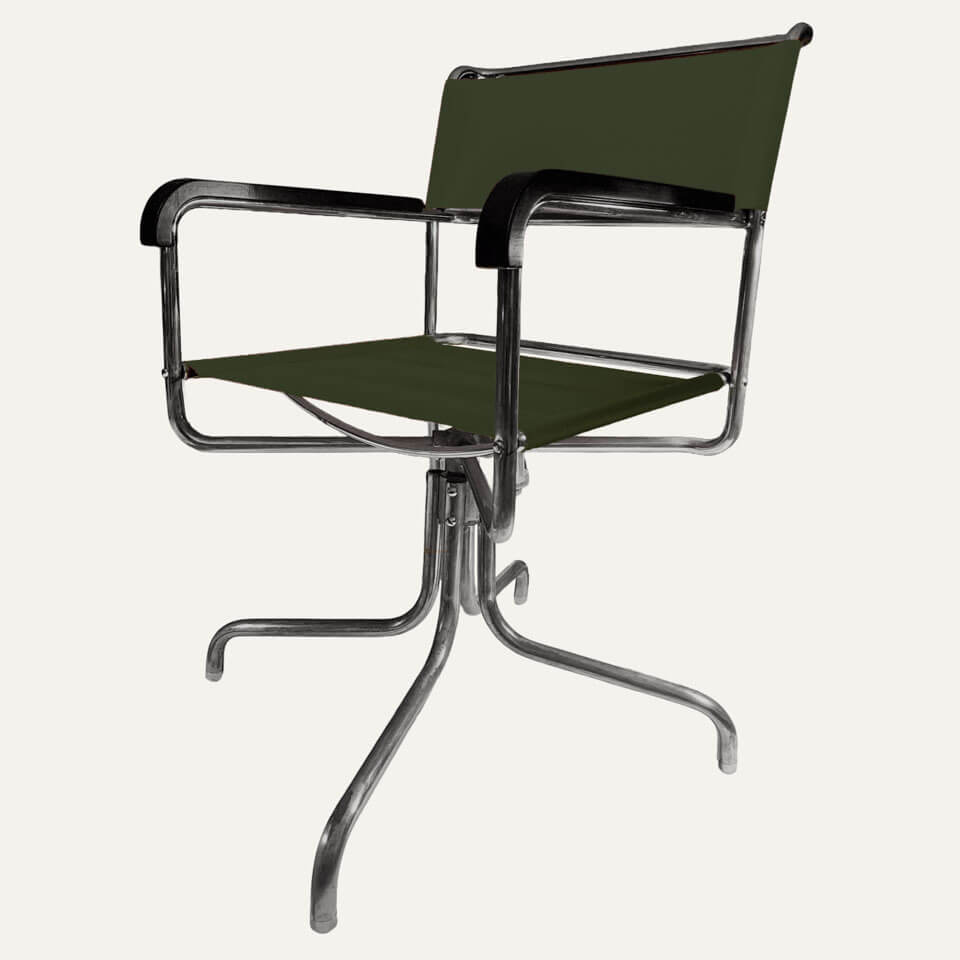
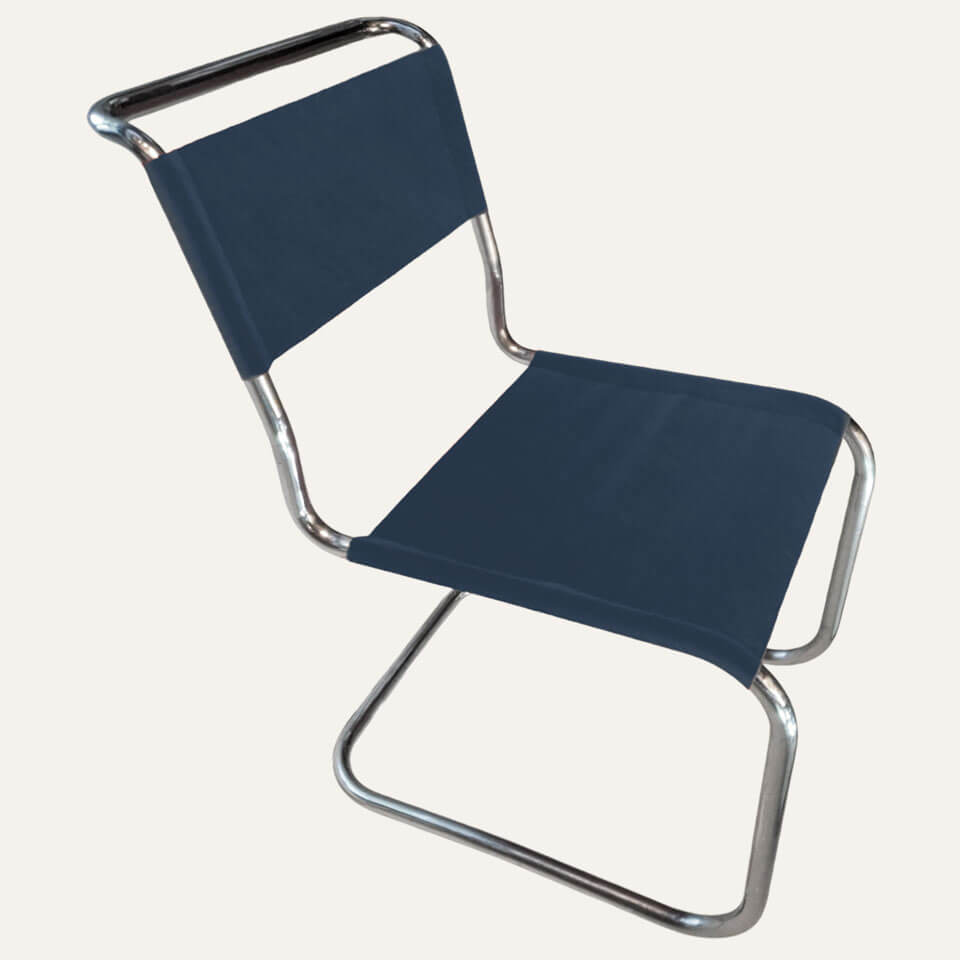
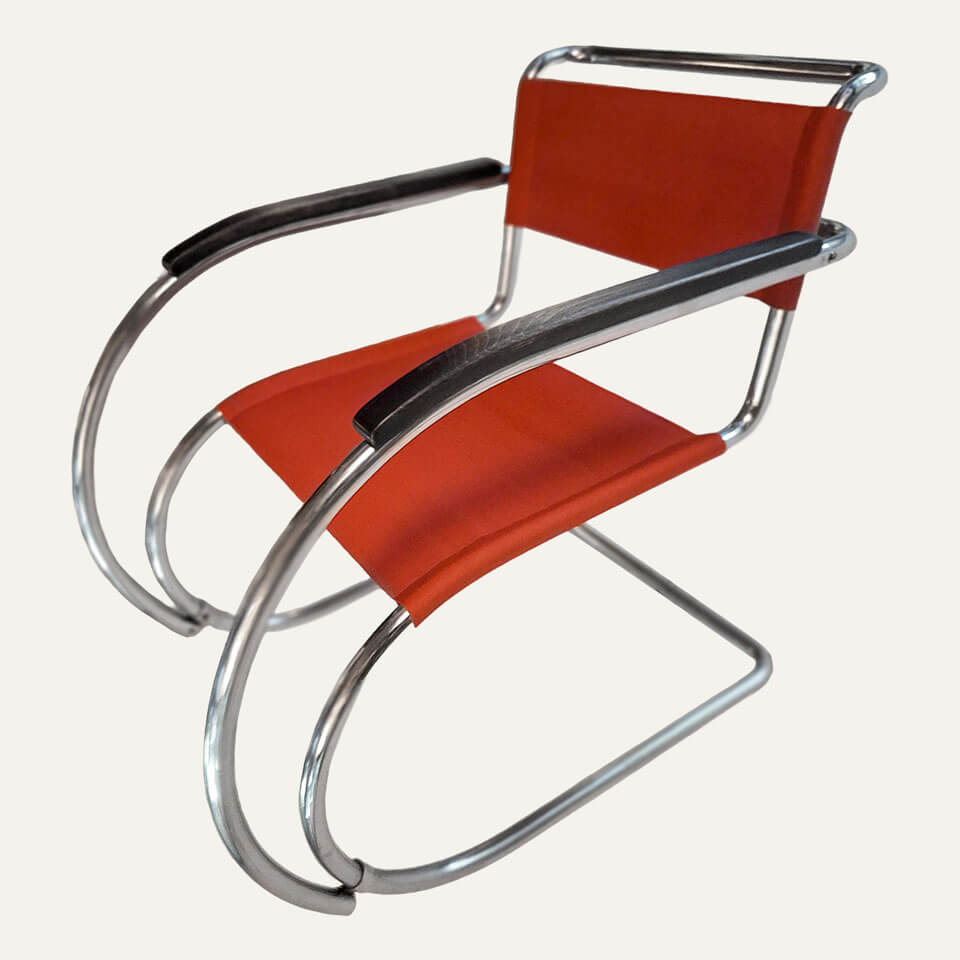
In 1929 she passed her journeyman examination in front of the Dessau Chamber of Crafts and received the Bauhaus Diploma No. 54 of the weaving mill in July 1931. As part of her work in the weaving mill of the Bauhaus, she was instrumental in the development of the so-called iron yarn fabric, a fabric covering for tubular steel furniture. Reichardt produced a durable and particularly solid “iron yarn” fabric, which was used for the covering of the steel pipe furniture by Marcel Breuer.
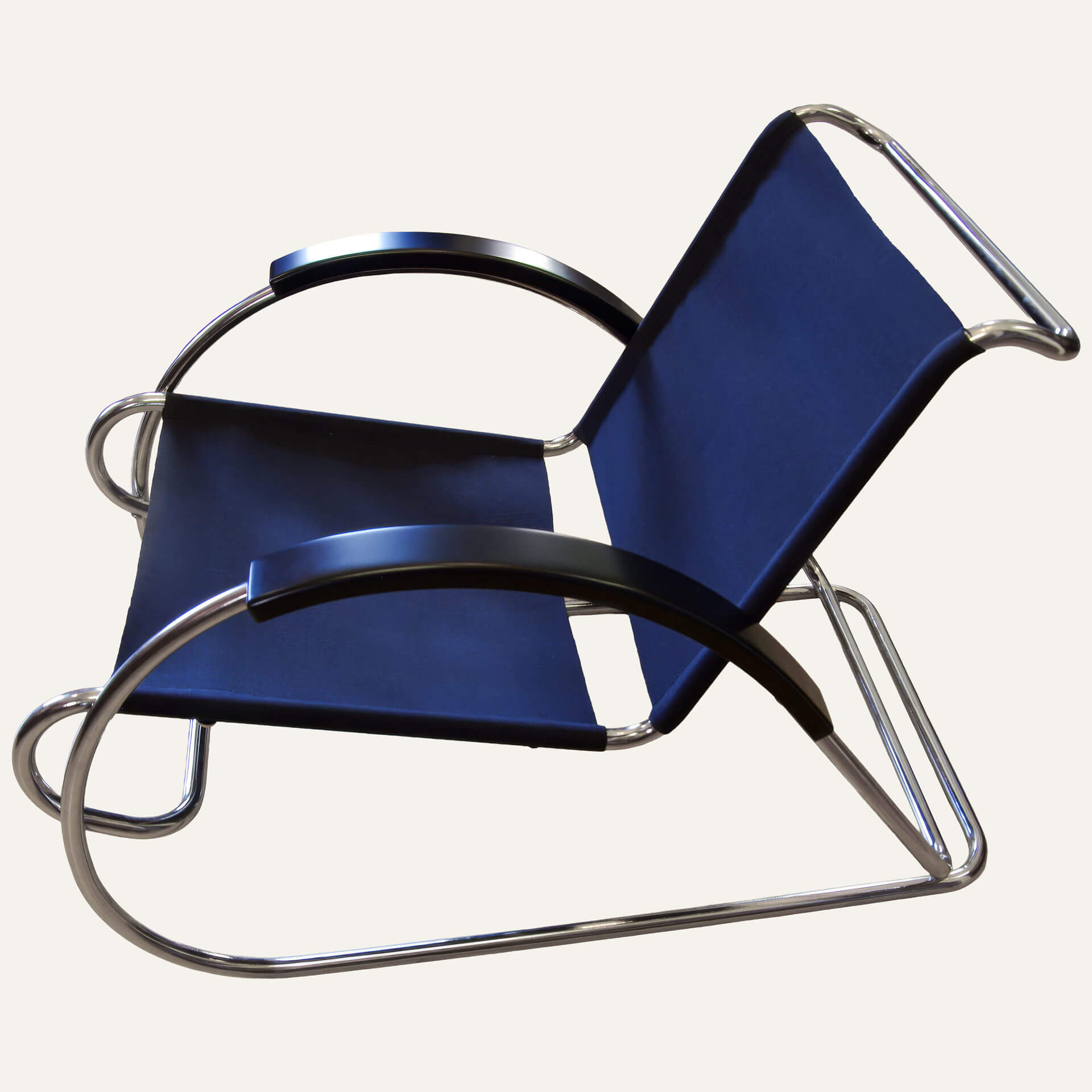
The ‘new’ iron yarn fabric
Cammann Gobelin Manufaktur® reconstructs iron yarn for your tubular steel furniture
The yarn is specially made for the new edition from a solid filament yarn and a coating of cotton as a coated gloss yarn. The straps are woven on a hand loom by an experienced hand loom in Saxony. This iron yarn fabric is intended as a reconstruction for the historically authentic restoration of tubular steel furniture and no fabric for everyday use. Occasional use to experience the nimbus of the tubular steel furniture is of course feasible.

- Photo M. Reichardt ca.1929 by Werner D. Feist; Photo M. Breuer ca. 1926 by Constance L. Breuer
- The rights of use for the designs implemented by us in the textile are exclusively with Allianz Textiles Denkmal gGmbH. Liability for ‘third-party rights’ from textile design is excluded.